VAPORS
A TRIBUTE TO ANDY MILLIGAN
When we asked cult filmmaker Bruce LaBruce if he was willing to share some thoughts on the topic of our retrospective with us, he most graciously gifted us an entire tribute to film director Andy Milligan—a must-read!
A girl after my own heart, Andrew Jackson Milligan Jr. was an openly gay USA film director, screenwriter, playwright, and costume designer, best known for directing 27 low-budget exploitation and horror films, many of which are now considered lost. A pioneer of avant-garde theatre (linked to the off-off-Broadway scene and the famous Caffè Cino, where he mounted productions of Genet plays) and early queer cinema, Andy, as he was known to his friends, is remembered for a raw, angry and nihilistic style, strongly influenced by a traumatic childhood. His father, a career military man, was nice to him, but his overweight, alcoholic, and possibly schizophrenic mother physically and mentally abused him and his siblings. She became the inspiration for some of his horror films which featured themes of transgression and punishment, dysfunctional family relationships, and physical deformity, as well as repressed sexuality and homosexuality. Milligan himself spent four years in the Navy, so who knows what other depraved and formative homosexual experiences he may have experienced?
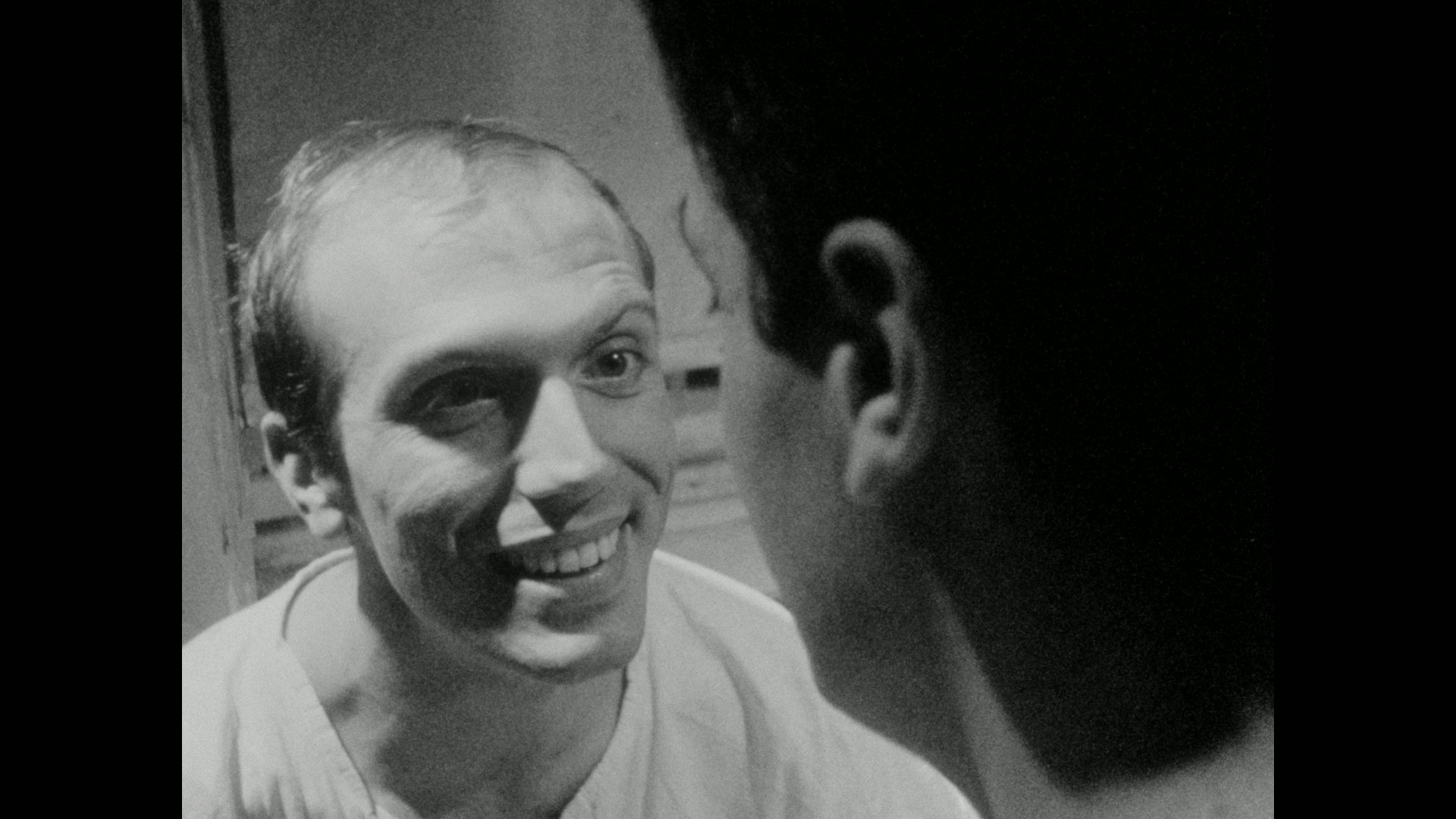
Perhaps Milligan’s best known film is his first, Vapors (1965), a thirty-minute black-and white-opus shot in 16mm, which remains undoubtably the most accurate and poignant depiction of the gay male bathhouse scene ever committed to celluloid, despite the fact, or perhaps because, it was written by a woman. (The writer, Hope Stansbury, was a well-known Off-Off-Broadway actress who wrote a handful of Milligan’s movies, and, incidentally, was briefly roommates with Warhol superstar Candy Darling.) Set in the infamous St. Marks Baths on a Friday night, the improvised set is bare bones and claustrophobic, augmented by Milligan’s trademark use of tight compositions and extreme close-ups to conceal his no-budget constraints, occasionally crowding the actors together in the frame so closely that it inadvertently approximates the mise-en-scene of an Ingmar Bergman movie. The film is essentially a two-hander (so to speak), a conversation between a middle aged man, Mr. Jaffee, and a younger man, Thomas, in a small cubicle, interrupted from time to time by the intrusion of a gaggle of effeminate Marys named Miss Parrish, Mavis, Thumbelina, and Taffy. If you’ve ever experienced the frustration of trying to have hot sex in a bathhouse cubicle while a couple of Chatty Kathy queens purposefully stand directly outside your door and gossip loudly for an hour, you will appreciate the veracity of this film. (How Ms. Stansbury knew about this phenomenon I will never know.) The dialogue is psychosexually disturbing and perverse, Mr. Jaffee talking at length about his son drowning upstate, and telling Thomas that he reminds him of the dead boy. Equally disturbing is when Mr. Jaffee plays “his little piggy went to market” with Thomas’ crooked toes. (The actor who plays Thomas clearly has bad skin, but characters keep telling him how beautiful and smooth his skin is, an example of the film’s strange, discordant tone.) After Mr. Jaffee leaves him alone with the present of a large, garish fake sunflower, his son’s favourite, Thomas cries, but soon enough another patron enters the cubicle and pulls down his pants. I can’t tell you how many times that has happened to me at the tubs! Made in 1965, Vapors was decidedly ahead of the curve, anticipating the deliciously self-loathing old school homophobia of Mart Crowley’s “The Boys in the Band”, which debuted on Broadway three years later.
After these early more arty types of films, Milligan, attracted by the 42nd Street theatre market (the so-called “grindhouses”), began producing feature-length horror films on a very low budget. He shot almost exclusively on 16mm film, personally overseeing the scripts, camerawork, editing, and even the period costumes, which he hand-sewed himself. (He owned a costume boutique in Greenwich Village brilliantly called Ad Lib.) His most famous and, alarmingly, most accomplished film was Fleshpot on 42nd Street, a sleazy underground B-movie starring Laura Cannon as Dusty Cole, a thieving, conniving street hooker who tries her best to avoid having to sell her body by ripping off her johns instead. Cannon was a beautiful and capable actress who elevated the several dozen raunchy X-rated NYC hardcore films she appeared in. After ripping off her john roommate who has the audacity to ask her to clean his apartment while he’s at work, and also taking a Jewish pawnshop owner client of hers to the cleaners, Dusty moves in with a snippy, flamboyant drag queen named Cherry Lane whose drag, although not autogynephiliac, is reminiscent of Ed Wood’s, whose oeuvre Milligans’ is often compared to. (Neil Flanagan, who played Cherry, was a respected, Obie award-winning theatre and TV actor who starred in several Mulligan films, including the title role in Guru, the Mad Monk.) The film’s depiction of the low-end New York gay street scene of the time was an even more cut-rate, more low-end, and more authentic version of Warhol’s Factory model. Dusty eventually abandons Cherry when she meets the Staten Island man of her dreams who owns his own home (Milligan’s house in real life doubled as the location), but at the end he is abruptly and unceremoniously mowed down by a speeding car, and she is left at the end back on 42nd street, continuing her relentless hustle.
As you might expect, the possibly bipolar or schizophrenic Milligan’s personal life was messy. Taking a cue from his mother, he was verbally and sexually abusive to male and female actors alike on movie sets. He was a non-smoker and non-drinker who flew into a rage when people drank alcohol or smoked or did recreational drugs around him. He never got a driver’s license, relying on public transportation wherever he lived, including Los Angeles. Now that’s perverse. Milligan’s boyfriend toward the end was Bobby Wayne Keeton, who was nicknamed “the human toothpick” because he was so gaunt and thin, and perhaps also because Milligan was heavily into S&M. One of Milligan’s best friends, Dennis Malvsi, was a noted abortion clinic bomber. Milligan died of complications from AIDS in 1991 after his beloved toothpick, who probably infected him, died of it. Neil Flanagan had already died of AIDS in Los Angeles in 1986.
Bruce LaBruce is the director of memorable films like Otto; or, Up with Dead People, L.A. Zombie (SLASH 2010), and The Visitor (SLASH 2024).
Andy Milligan’s Vapors and his feature film Fleshpot on 42nd Street are screened together at the Metro on 25/09. at 6 p.m.