Taming the Horrors of Existence
Joe Coleman’s Wild West
It started with a phone call from a fellow reporter. “Hey, man, Joe Coleman is coming to Vienna. I said I’d look after him, but now I can’t make it. You want to take over?”
Back then, in the mid-nineties, I had already read quite a bit about the American artist in magazines devoted to pop-cultural outlaws—and I was fascinated. Coleman outdid most of the literary, musical, and full-body-pierced whackos who haunted those pages. A painter of intricate microcosms poised somewhere between sex, violence, and purgatory; a sharp-tongued theorist; a performative pre-punk blurring the line between art and criminality through acts of self-harm—he seemed to have landed from another planet.
“Yes”, I said, “of course I’ll do it.”
At the same time, panic set in. I had just agreed to spend two days in Vienna with a self-proclaimed serial-killer nut and notoriously difficult loner—which meant I was now expected to anticipate his every wish.
Joe Coleman—I can reveal that much already—turned out to be a charismatic, brilliant man with an arrestingly dark sense of humor. It was then that I realized something I have since come to regard as almost a truism: the more wildly transgressive someone’s life and imagination, the more calmly they can face life’s monstrosities. That’s why the genuine artistic rebels, stage wreckers, and hardcore outsiders are so often remarkably likeable. It’s ordinary normality that harbors the real horrors.Over those sunny spring days, between visits to the Narrenturm—the former eighteenth-century mental asylum—the Prater, and Vienna’s pathology museums, we talked endlessly. Joe spoke about the beauty of tumors and his equally intense fear of disease; about crime and redemption; about his parents’ cancer; and about humanity, which, he believed, had spread across the planet like a malignant growth.
Some of the conversations stayed with me for years. So did my later visit to his apartment in Brooklyn, a veritable cabinet of morbid wonders. “I suffer from the chaos in my head,” Joe told me, gesturing toward his fastidiously ordered shelves of horrors and, above all, at his painstakingly rendered paintings. “I don’t need any more chaos in my life—or in my paintings.”
If you dwell on this sentence, you can almost distill from it a history of a possible counter-avant-garde: a tradition of artistic loners and oddballs standing in direct opposition to modernity’s formal purity. Those who are constantly trying to keep the fuses in their own minds from blowing have little use for abstraction or action painting. What they need are precise lines to give shape to a bewildered spirit and keep it under control.
Taming the horrors of existence through their precise depiction—that, in essence, is what Joe Coleman has achieved in his art. The fact that he still devotes months, sometimes years, to a single painting is due in no small part to a fortunate turn in his life. Thanks to friends, patrons, and collectors such as Jim Jarmusch, Asia Argento, and Iggy Pop, he no longer has to worry about paying the bills—or about expanding his gloriously vile archive of perversities.
Above all, however, there’s the extraordinary Whitney Ward, whom he married more than twenty-five years ago. Like her husband, the photographer, performer, and dominatrix emerged from a dark past. For Joe, Whitney became a guiding light, a healer, and an inexhaustible source of inspiration and motivation.
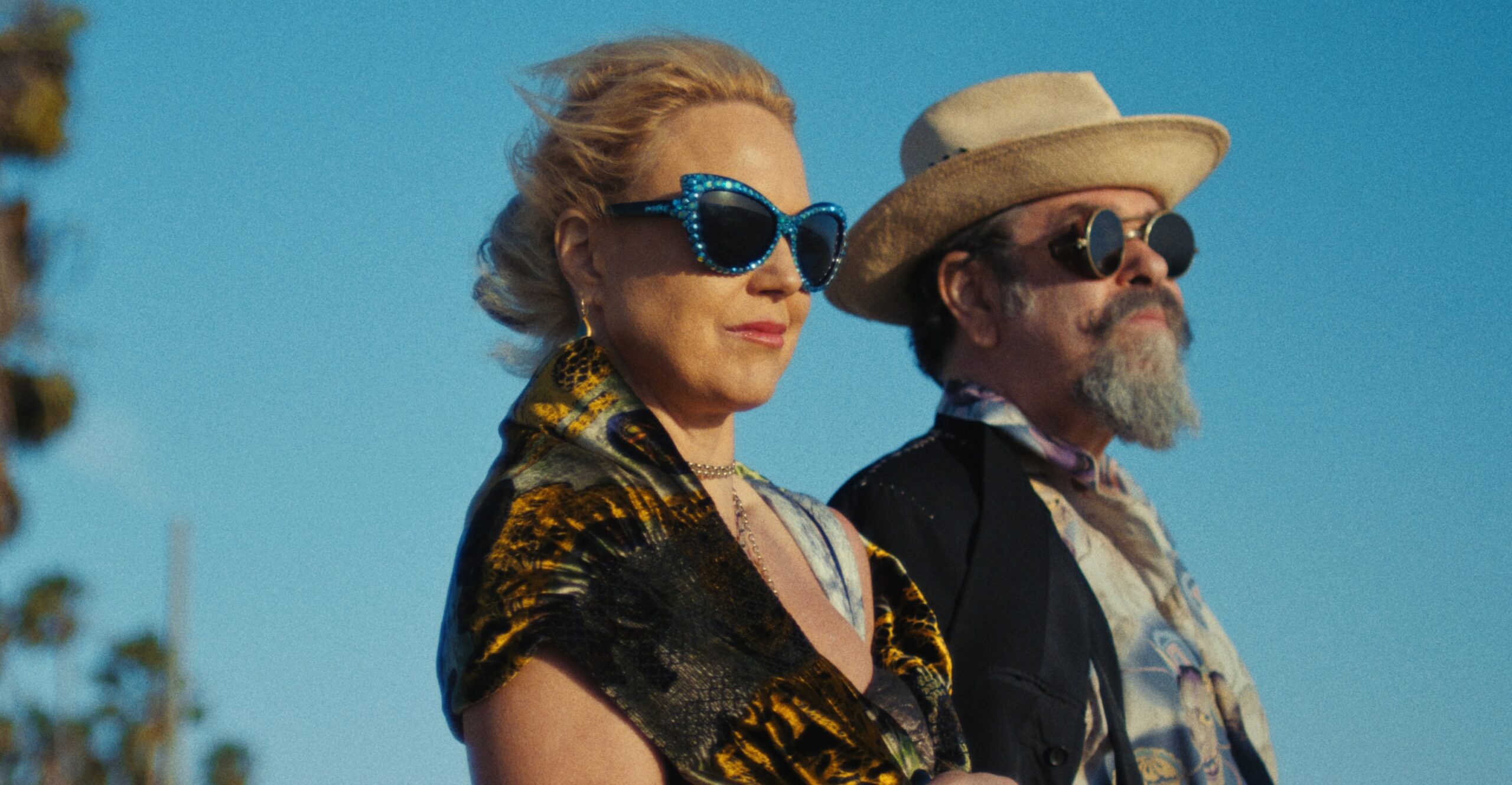
How Dark My Love, Scott Gracheff’s documentary about the couple, recounts their singular love story. At times painful and controversial, it is also a celebration of rebellion and radical otherness. Most of all, though, it is fervently romantic. Watching Joe and Whitney embrace, kiss, and hold hands, we, the audience, are allowed to dream, if only for a moment, of a small outsider utopia.
Christian Fuchs is a film journalist, radio moderator, and has been an active part of the Austrian music scene with projects like Fetish 69, Bunny Lake and, most recently, as Christian Fetish.